

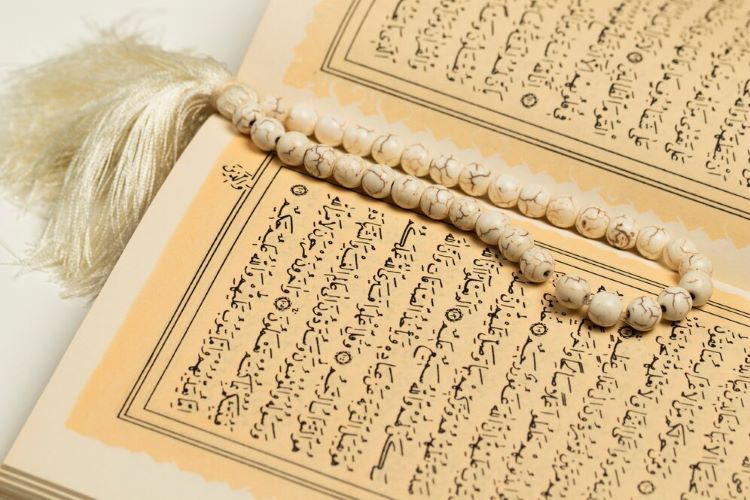
In Islam, reading the Quran entails far more than discerning its intended meaning. Understanding the verses of the holy book is accompanied by proper reflection. It requires utmost care, attention, and respect. A fundamental aspect of Quranic recitation known as Tilawah is observed through stopping at the prescribed signposts and respectful pauses placed throughout the text. Waqf, as they are known in Arabic, the Quran’s divine beauty and awe-inspiring message can often be easily distorted if the reciter misunderstands the waqf sign. For both novices and advanced reciters, mastery of the Quran’s stopping rules and associated symbols is fundamental to each attempt at recitation being accurate, respectful, and spiritually uplifting for the soul. Here, we will cover stop signs in the Quran.
Understanding Waqf – The Art of Stopping
In Quranic recitation, to waqf means to pause at certain points in a verse or between verses based on certain factors like word meaning, grammatical rules, or even one’s breath. Stops that involve pausing occur where the sign “waqf” is assigned.
Stopping Correctly Waqf:
- Helps in managing proper breath during the recitation
- Preserves the verses’ meaning
- Enhances the flow and rhythm of the Quran
Helps avoid altering or distracting from sacred meanings because of missed or misplaced pauses. Disregard for pause principles leads to either a distortion of meaning or, at times, even a reversal of what Allah intends in his words.
Why Stop Signs in the Quran Are Important?
The meaning of the Quran, unlike any other book, is intertwined. Some parts of the verses are a bit difficult and need the next words to make full sense. Stop signs in the Quran assist the reader:
- When to take breaks
- When to refrain from pauses
- When pauses are encouraged
- When breaks are not allowed
In the absence of stop signs in the Quran, one runs the risk of trailing off mid-sentence. It might render the portion of their sentence they consider incomplete, vague, or misleading. So, the scholars of Tajweed (Quran’s pronunciation rules) have meticulously placed stop signs after analyzing the structure of the Quran, grammar, as well as meaning or meanings.
Types of Stops in the Quran
The stopping rules are divided into several categories depending on the importance and necessity of stopping or continuing. Let’s break them down clearly:
1. Waqf Lazim (Compulsory Stop)
- Symbol: ۘ
- Meaning: You must stop at this sign.
- Why: Continuing without stopping can lead to changing the intended meaning of the verse or result in grammatical errors.
- Example: If you see a Waqf Lazim sign, you should not continue reading until you pause and take a breath.
2. Waqf Jaiz (Permissible Stop)
- Symbol: Small letter ج
- Meaning: You may stop or continue.
- Why: Both stopping and continuing are allowed because the meaning remains correct either way.
- Advice: It’s better to stop if you’re running short of breath, but otherwise continuing is fine too.
3. Waqf Mamnu (Forbidden Stop)
- Symbol: Small letter لا (La)
- Meaning: Do not stop at this sign.
- Why: Stopping here would disrupt the meaning or cause an incomplete or wrong understanding.
- Important: If you must stop (due to running out of breath), then you should go back and read a few words again to connect the meaning properly.
4. Waqf Taam (Complete Stop)
- Meaning: The meaning of the sentence is complete, and it’s highly recommended to stop.
- Usually: Found at the end of verses (ayahs).
5. Waqf Kafi (Sufficient Stop)
- Meaning: The sentence’s meaning is completed, but it is closely related to the next sentence.
- Recommendation: It is preferable to stop, but continuation without pausing is also acceptable.
6. Waqf Hasan (Good Stop)
- Meaning: Stopping here gives a good sense of meaning, but it is not compulsory.
- Advice: It’s better to stop if necessary, but not always required.
Common Stop Signs in the Quran and Their Meanings
The Quran features many special symbols to guide reciters properly. Here are the most common stop signs in the Quran:
| Symbol | Name | Meaning |
| مـ | Waqf Lazim | Mandatory Stop |
| ج | Waqf Jaiz | Permissible Stop |
| ط | Waqf Mutlaq | Full Stop |
| ز | Waqf Mujawwaz | Allowed to continue or stop |
| صلي | Qeel As-Salah | Better to continue without stopping |
| قلى | Qeel Al-Waqf Awla | Better to stop |
| لا | La Waqf | Forbidden to stop |
| س | Saktah | A very short, silent pause without breathing |
Each sign is strategically placed, reflecting deep linguistic and theological scholarship.
Special Symbols Related to Pausing
Besides the standard stop signs, there are special markings to guide breathing and rhythmic recitation:
- Saktah (س): A very slight pause without breaking breath. It is shorter than a normal stop.
- Wasl: Suggests that the recitation should continue without stopping for a natural flow.
- Qat’ (قطع): Indicates a complete stop where the recitation ends or a major topic shift happens.
Understanding these subtle signs adds beauty and depth to Quranic recitation.
Application of Stop Signs in the Quran
In the case of reading, one must keep in mind the stop signs in the Quran:
Prepare your breath: Always think of your breath at the stopping points.
Respect obligatory stops: Do not skip any must stops due to their importance within the Quran.
Avoid forbidden stops: Continue without stopping at places of “لا” unless necessary.
Grasping the meaning: A learner should be well acquainted with the meaning of the verses so that proper stopping points are anticipated.
Practice with a teacher: A learner is bound to understand the stopping points intuitively by practicing Tajweed with a certified teacher.
Things to Avoid When Diagnosing Stopping Signs Mistakes
While reading this, take note of the following more common mistakes:
- Stopping where the user is expected to continue. This will result in an incomplete or confusing meaning.
- Continuing where stopping is obligatory will completely shift the provided message.
- Incorrectly pronouncing a letter after a pause. Most notably, each column of light and heavy letters, Tafkheem and Tarqeeq.
- Gradual withdrawal while exerting concentration and consistent practice can help avoid these errors.
Why It Is Important To Learn Tajweed In Bid To Master Stops
As already stated, stop signs in the Quran are but the stems and leaves of Tajweed’s tree. It is impossible to have full mastery over pauses and silence in the Quran without learning Tajweed first.
- Tajweed rules make sure that you:
- Make no mistakes when pronouncing letters.
- Follow the rules of start and pause/slash.
- Do not lose the beauty and message of the Quran.
Because of this, attending Tajweed classes or studying with knowledgeable teachers is advised for Muslims who want to enhance their recitation skills.
Conclusion
Stop signs in the Quran are important for reciting the Quran. The same importance given to pronouncing the words of the Quran with proper Tajweed should be given to stopping at the proper places. Pausing and stopping at the proper places is equivalent to paying respect and worship to the meaning of the recitation, and in following the words of the scholars. Stopping, no matter the context, should never be done without no logic, reason, or purpose. It should always have a motivation that relates deeply to the beauty, essence, and devout nature of the text being cited.
FAQs
1. What is the meaning of a stop sign in the Quran?
Stopping signs in the Quran regulate how the readers make pauses. Reciting the verses without the stopping signs means there is disruption of harmony and loss of meaning. The stopping signs within each verse enable flow and prevent deviation from the meanings intended.
2. Do you have to stop at every sign in the Quran?
No. It is not necessary to come to a complete stop at every sign. Some signs allow a pause (Waqf Lazim), while some do not (Waqf Jaiz). There are some signs, such as “لا” (La), that tell you not to stop.
3. What consequences may arise from bypassing a compulsory stop sign in the Quran?
Not adhering to a compulsory stop (Waqf Lazim) could mean that there is a grave blunder in context regarding the verse. A reciter must go back and do a proper stop and must ensure he does not change the meaning he intends while continuing from the pause point.