

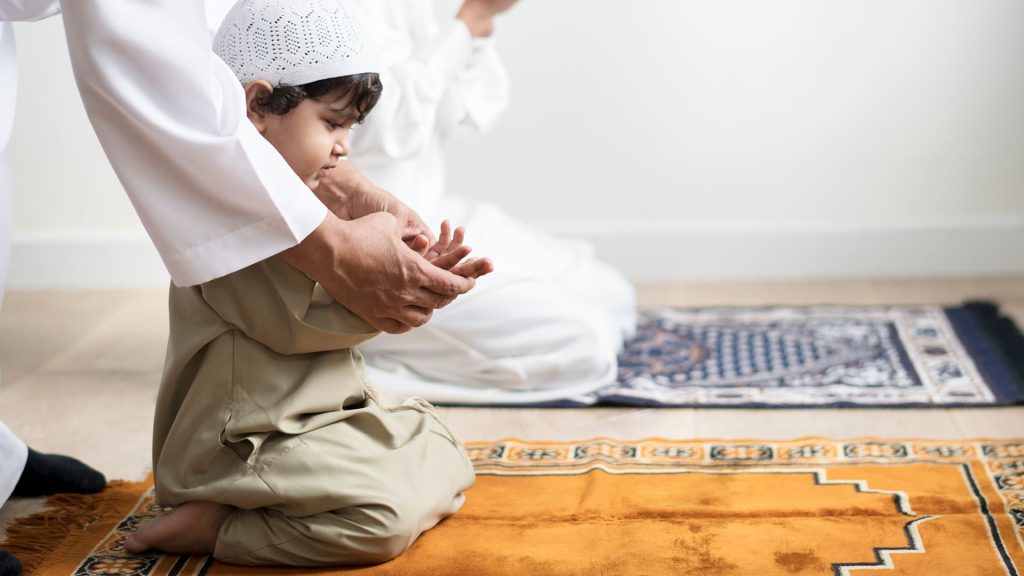
Dua remains one of the most beautiful acts of worship that every Muslim is invited to partake in. Dua is much more profound than a request fulfilment service. Instead, it is more of a profound conversation with Allah, your Creator and the One who knows every single thing about you. Imagine having to speak to the King of Kings, without any of the normal hurdles that are appointments, intermediaries, or waiting lines? That is the essence of dua, a direct and unrestricted communication with Allah, anywhere, and at any time.
What is Dua in Islam?
In its most simple and, Dua is understood as “supplication” or “invocation.” It is the moment you request Allah to fulfil any of your wants, be it spiritual, worldly, or even as simple as retrieving your misplaced keys. In the Qur’an, Allah Himself entreats believers with an invitation to call on Him without any intermediaries: ` “And your Lord says, ‘Call upon Me, I will respond to you.” (Surah Ghafir 40:60) `
This singular most important verse captures that dua is in fact a command as opposed to merely an offer. While making dua, you’re accepted by Him and at the same time embracing His dominion over everything. It is a form of humble worship that every single person is encouraged to partake in with all mercy and guidance.
The Importance of Dua in the Life of a Muslim
For a Muslim, dua is more than a mere custom; it is a lifeline. It can help soothe your heart during trials, help you come close to Allah during ease, and be of use in self-improvement. As we know, Prophet Muhammad (SAW) said dua is “the essence of worship.” This clearly explains the importance of dua for a Muslim’s spiritual journey.
Think of dua as a bridge which Allah has provided you. It can be done in the comfort of your room, in a corner of a busy marketplace, and in your own words. What truly matters is your genuine devotion to it. Even if your voice quivers and your words fumble, Allah knows and understands the emotions behind them more than anyone.
Qur’anic Verses About Dua
The Qur’anic verses on making dua and supplication are very motivational. Some verses have a promise which clearly states a reward, while others reflect to us how Allah is close to us.
Surah Baqarah 2:186 states, “When My servants ask you concerning Me, indeed I am near. I respond to the invocation of the supplicant when he calls upon Me.”
“Call upon Me, I will respond to you.” is verse 60 of Surah Ghafir 40.
The reasoning behind Allah’s words in the above verses is that he is the only one who is perfectly just.
Hadith on the Virtue of Dua
The importance and power of dua are mostly covered by people, just as it is covered by our Prophet (SAW). In one of his narrations, he said a “Nothing is more honourable to Allah than the supplication.” (Tirmidhi)
This does not disregard answers’ wait time, as time can serve various answers in the world. Dua can be answered with a u-turn and a change in the timing and circumstances.
The Connection of Dua and Qadr (Destiny)
One of the most intriguing ideas in Islam is the interaction of dua with Qadr (destiny). Some may ask, “If everything is already predestined, what’s the point of making dua?” The reason is that dua in itself is a part of destiny. Allah has predetermined that you will make dua and will, in turn, change your situation because of it.
Dua for Forgiveness
One of the most famous and comprehensive duas for forgiveness is the Sayyidul Istighfar:
“O Allah, You are my Lord, none has the right to be worshipped except You. You created me and I am Your servant, and I abide by Your covenant and promise as best I can. I seek refuge in You from the evil of what I have done. I acknowledge Your favour upon me, and I acknowledge my sin, so forgive me, for verily none can forgive sin except You.” (Bukhari)
This dua not only seeks forgiveness but also acknowledges Allah’s blessings and your dependence on Him.
How Your Life Can Change With Dua?
The Prophet (SAW) stated:
“Nothing changes the Divine decree except dua.” (Tirmidhi)
This tells us that dua can change a person’s situation. Whether it is to improve a person’s health, ease their struggles, or provide them with opportunities, dua is heavily influential in determining the course of a person’s life.
Understanding the Concept of Acceptance
It is vital to acknowledge that not all duas will be answered, and that is, in fact, a gift. Some of the things that you may ask Allah for may not be in your interest a few years down the line. Allah, in His infinite wisdom, may choose to provide you with something much better or grant you the ability to avoid great pain.
What is essential is that a person remains steadfast with Allah’s decree and continues to make dua without despondency.
Conclusion
Making Dua your daily custom helps you to invoke Allah anytime, and certainly not only during troubling times. By regularly including dua in your daily routine and trusting in Allah’s divine plan, you are bound to enhance your faith, achieve personal tranquillity, and experience a complete life transformation.
Whether simple or complex, every humble dua you make holds immense potential, and your inner heart is free to hope to its heart’s content.

FAQs
1. Is it compulsory to make dua in Arabic?
No, dua can be made in any language you prefer. Rest assured, Allah can comprehend all tongues and even your most quiet inner thoughts.
2. Is it a prerequisite to have Wudu to make dua?
Having Wudu can be helpful, but not having it is no barrier. Wudu is not a requirement to make dua.
3. Is writing subsections down permissible?
Of course, doing so can enhance remembering the request and also amplify concentration.
4. Is it permissible to make dua for a non-muslim?
You can still make dua for his or her good guidance and also mental and physical well-being.
5. How often should one make dua?
Making dua as often as possible is encouraged as it is boundless. Allah appreciates when his people put in the effort to seek Him often.