

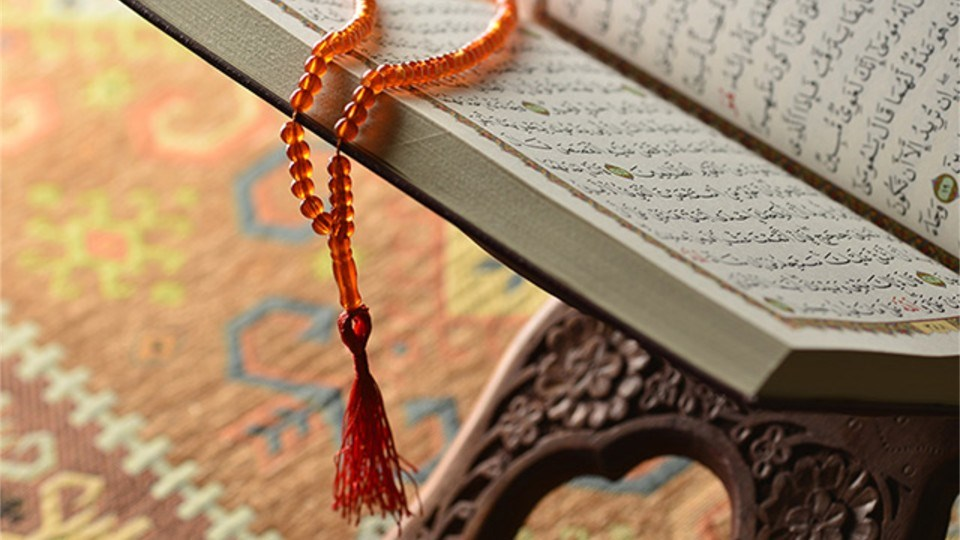
The Quran, the literal word of God himself, has been held in high esteem by Muslims across the globe because of its divine wisdom, guidance, timeless principles and astounding subtlety of language. Like all significant religious texts, the Quran raises many questions and much curiosity, among both Muslims and non-Muslims, about its content, structure and length. One common question that many people ask is regarding how many pages in the Quran. The solution is simple in concept, but there are a couple of subtleties that vary by presentation style, script, and publication policy.
The Standard Pages in the Quran
The standard and most commonly cited number of pages in the Quran is 604 pages. This version is by the Madani Mushaf, commonly used in print form, but this can now be used in app form too.
This edition is the most compelling because it asserts that 604 temptations of Allah on the pretext that “you won’t be able to commit it to memory”. It has the Uthmani Script style as in the standard Medina Mushaf, and it is very good to be used by students learning the holy Quran.
Why 604 Pages?
The Quran is divided into Ayaat. Each Juz is a quarter of a Hizb in a standard Madani Mushaf, and each Hizb is, in turn, a quarter of the Quran. Thus, readers (and for many listeners) can read the Juz to complete the Quran in one week.
So, 30 Juz x 20 pages = 600 pages, give or take the 4-page difference in some chapter length and spacing. Which is how the average total comes to 604 pages.
Factors That Affect Page Count
While the 604-page format is most used, there are a few different numbers of pages in a printed Quran, according to the following:
Script Style and Font Size
Variants: Numerous scripts are used to print the Quran. It may make it difficult to read the script from which one learnt to read. For instance:
Indo-Pak Script: The script used in South Asia (except in Kuwait and occasionally in the United Arab Emirates) has a more calligraphic style and often a greater number of pages (1350), with sometimes extensive use of bold as well as larger script.
Uthmani Script: Popular in Arab countries, where it is more condensed and uniform, enough to fit the Quran neatly on 604 pages.
Translation and Tafsir
Once the translations (or Tafsir) are attached, the page count rises noticeably. A Quran with Arabic-only text may have a few hundred pages, but the same number of pages would be used in a Quran with English (or Urdu) translation.
Page Size and Layout
Some publishers print large-size Qurans with fewer lines per page or spacing so as to have fewer pages; on the contrary, pocket-size Qurans have smaller fonts and more pages since the complete text is required.
Structural Divisions of the Quran
To get a complete overview of the Quran, you need to know how the book is structured:
Surahs (Chapters)
The Quran is assembled into 114 chapters called Surahs. The Surahs are of unequal length; some are quite long, while others are relatively short. The shortest Surah in the Quran is Al-Kawthar, which has only 3 verses. The longest Surah is Al-Baqarah, which has 286 verses.
Ayahs (Verses)
There are 6,236 (or 6,347 according to another calculation) verses (Ayahs) in the Quran, with 114 (or 113) of them being Makki and 28 Madani. You may find other tallies that are a bit different due to verse division.
Juz (Sections)
As previously stated, the Quran is divided into 30 Juz, of about 20 pages each in the standard 604-page text. It helps Muslims keep pace in their readings or memorisation, says Ms. Abbass.
Hizb
Each Juz comprises two Hizbs, thus 60 Hizbs in total. Some copies of the Quran go so far as to lay out quarters of, or 1/8ths of a Hiz,b to offer more granular breakdowns.
Advantages of the 604-Page Standard Format
The 604-page format isn’t arbitrary. It serves several important functions:
Hifz (Memorisation) Consistency: This version is being used by students to memorise the Quran all over the world. “Consistent typefaces aid them in retaining the location of the words on a page.
Group Reading Made Easy: In mosques and schools, an open layout that fits everyone is key, figuratively and literally.
Reading Simplicity: With only 20 pages per Juz, you can finish the entire Quran in about a month by reading about 20 pages a day.
Conclusion
So, how many pages is the Quran? The Standard copy of the Madani Scripture520, Pgs. This script is now the standard script for the Quran, as it is an acceptable, simplified form that does not change the text in any way. It makes the Mushaf particularly well-adapted to recitation as a means of memorizing the book. This reading order grew out of the order of scoops in which Sunshine was not used, also with one weight assigned to each scoop, although the size of the weight varies. The Mushaf is larger than those in North Africa by a span.
But the number of pages is different according to script, font, translation and commentary. Regardless of whether you are committed to memory, learning, or simply reading for personal edification, it’s not merely about how many pages there are, but how deeply you participate with each page.
FAQs
Why does the Qur’an have 604 pages in most printed forms?
The 604 pages are rendered from the Madani Mushaf style, where the Quran has been divided into 30 Juz, each with about 20 pages or so. It will help you read the Quran in 30 days or even during Ramadan.
Do Quran translations have the same number of pages?
No Qurans with translations often contain more pages because they include the original Arabic text along with a translation. Some can be more than 1,000 pages.
What is the page number difference between the Arabic and Indo-Pak Quran?
Yes. Indo-Pak script Qurans are normally printed with more pages (700-850+) because of smaller text and larger page canvas. In the Uthmani script, it is maintained at 604 pages.
What is the amount of verses in the Quran?
The Quran contains 6,236 verses (Ayahs). Some other versions may have slightly different numbering (how the verses are divided).
Is it possible for me to read the 604-page format of the complete Quran within 30 days?
Yes. Should you read 20 pages a day, you will finish the Quran in 30 days, super handy if you are reading during the month of Ramadan.