

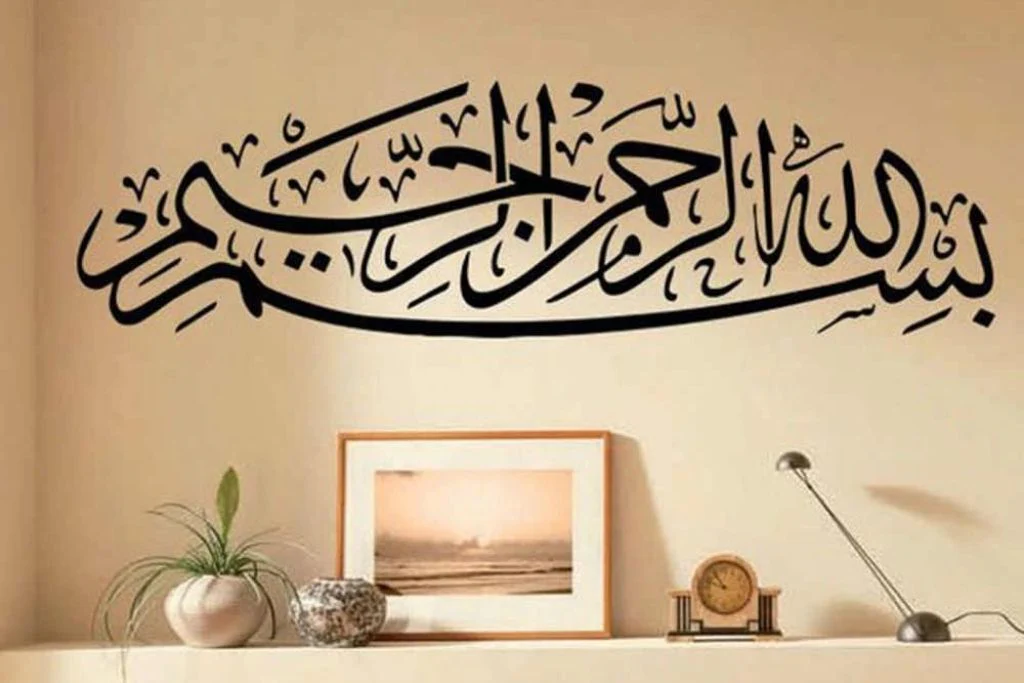
“In the name of God”, a word so frequently heard yet so profound in meaning. Whether murmured before a meal, offered in fear or hope, this phrase means more than its mere repetition. It is akin to a spiritual prayer, and there is a sacred bond between the human heart and the divine. In this article, let’s uncover the meanings, the cultural importance, and the spiritual effects behind the word “Bismillah.”
What Does Bismillah Mean?
Literal Translation of Bismillah
‘Bismillah’ is derived from the Arabic sentence ‘Bismillah-hir-Rahman-nir-Rahim’, which refers to ‘In the name of Allah, the Most Gracious, the Most Merciful’. The original expression, “Bismillah”, means “In the name of Allah”. It is a phrase invoked by Muslims all over the world before embarking on any act, whether big or small, seeking divine assistance and blessings.
This simple, lovely line is chock-full of profound theological content. It admits the unity of Allah, believes in His mercy and clemency, and trusts in Him. It’s not just a start, it’s a way of life. When you say “Bismillah”, it’s as if you are submitting to the sovereignty of Allah and entrusting all of your actions, speech, and results to Him.
Context in Daily Muslim Life
Bismillah is not only invoked in formal prayers, but it flavours every aspect of Muslim existence. Whether it is starting a car or starting a job, saying “Bismillah” is simply saying, “I start this with God’s name, His will and His blessings.” It’s a declaration of dependence, a strategy for spiritually mooring oneself before going underground.
This simple entreaty was a reminder that we are not in charge of our destinies, but we do have the ability to direct our desires towards the Creator. From an imam in a mosque to a student before an exam, the goodness invoked by “Bismillah” provides comfort, courage and clarity.
Historical Significance of Bismillah
Bismillah in the Quran
The opening chapter of the Holy Quran, the Bismillah-ir-Rahman-ir-Raheem, appears at the head of 113 out of a total of 114 chapters of the Quran. That in itself is a powerful statement of its significance. It’s not merely a preface, but a ground. The recurring opening statement may perhaps indicate that every divine Commandment and revelation is commenced in the Name of Allah, so that we are not forgotten that the very words of the Quran are a product of His Compassion.
Surah An-Naml, (27:30) is given particular attention as Bismillah features within the verse, “and it is from Solomon and it is Bismillah, Ar-Rahman, the Ar-Rahim”. This suggests the Prophet Sulaiman [AS, or Solomon]himself used the name ‘Bismillah’ when communicating, as this invokes divine wisdom.”
Use of the Prophet Muhammad (PBUH)
’ The Prophet Muhammad (peace be upon him) opened his speeches, letters and decisions with ‘Bismillah’. Numerous hadith narrations mention that he instructed the companions to say Bismillah before eating, travelling, sleeping and so on. This was more than just a ritual, but part of the Prophet’s mindfulness, a way of maintaining spiritual awareness at all times.
One powerful hadith found in Abu Huraira states that: “Every important or useful thing that has not been initiated with Bismillah is incomplete (deprived of blessings).” This hadith demonstrates the importance of this phrase in Islamic manners and belief.
Spiritual Benefits of Saying Bismillah
Protection from Evil
Saying “Bismillah” is thought by many Muslims to offer a protective shield. It is not a belief but a spiritual practice with its roots in millennia of experience and revelation. By beginning anything in the name of Allah, you are asking God to protect you with his might, and that harm should not come to you.
Bringing Barakah (Blessings)
Aloudly saying, “Bismillah” is an invitation for Allah’s blessings to be showered upon us. It is said that if you begin a task in the name of Allah, not only is it guaranteed success but barakah (a divine increase from God) as well. Even if it seems trivial, such as giving food or starting a project, saying Bismillah will result in bigger results.
The benefits of saying Bismillah are not limited to this world alone. It gives peace, serenity of mind and spiritual exaltation. It turns the mundane into moments for divine connection.
Bismillah in Daily Activities
Before Eating, Travelling, or Sleeping
We are always taught to say Bismillah before eating. The Prophet Muhammad (PBUH) emphasised this practice because food is more than just sustenance; it’s a gift from Allah. By saying Bismillah, it is thanking God and making the act of eating by beginning it spiritually.
Another time when Bismillah is extremely important is while travelling. And before they board a car, plane or walk out the door, many Muslims say: “Bismillah, tawakkaltu ‘ala Allah” – “In the name of Allah, I place my trust in Allah.” It’s a spiritual GPS, directing you on your way and keeping you from disaster.
Training Our Children to Say Bismillah
Teaching children to say Bismillah is more than just teaching them good manners; it’s a way of nurturing their spiritual senses. Children are taught to say it before they open a book, drink water or pick up a toy. It becomes second nature, a habit encased in meaning.
When children say Bismillah, they are learning that they are never alone; Allah is always there to guide and protect! It creates a relationship with faith that is personal, potent, and not simply ritualistic.
Conclusion
In other words, saying “Bismillah” is not a mere religious act, but an expression of deep faith, intention, and trust. With a single word, you are inviting the divine into your ordinary. Whether you’re sitting down to dinner, setting out on a journey, or beginning a new chapter in life, saying “Bismillah” coveys your endeavours and actions under the canopy of Allah’s mercy and guidance.

FAQs
What is the effect of saying Bismillah?
When you say Bismillah, you’re calling upon the name of Allah and asking Him to bless and protect that which you are about to do. It provides spiritual awareness, barakah, and protection against harm or negative energies.
Can non-Muslims say Bismillah?
Yes, anyone can say “Bismillah.” It translates to “In the name of Allah (God)” and a non-Muslim who believes in a higher power of some sort or simply respects Islamic tradition has free rein. But let’s understand its complete spiritual, religious, and philosophical value through the lens of Islam.
How is it pronounced?
The full phrase is “Bismillah-ir-Rahman-ir-Raheem.” It’s pronounced like this: BIS-mil-lah ir-Rah-M AN ir-Ra-HEEM. You can, of course, practice with natives or listen to recitations to get the pronunciation just right.
Is there any other commentator who has said Bismillah in another language?
Although the Arabic edition is standard and recited across the globe wherever Muslims practice it could certainly be contained in addition to expressed in words. But for religious rituals and deeper spiritual immersion, the Arabic phrase has an extra weight.
Why is Bismillah so powerful?
Bismillah’s power is that it places your intention at the centre and, through it, connects you to the divine. It reminds you that you’re not alone, that what you do is acknowledged and directed and blessed by the Most Merciful.