

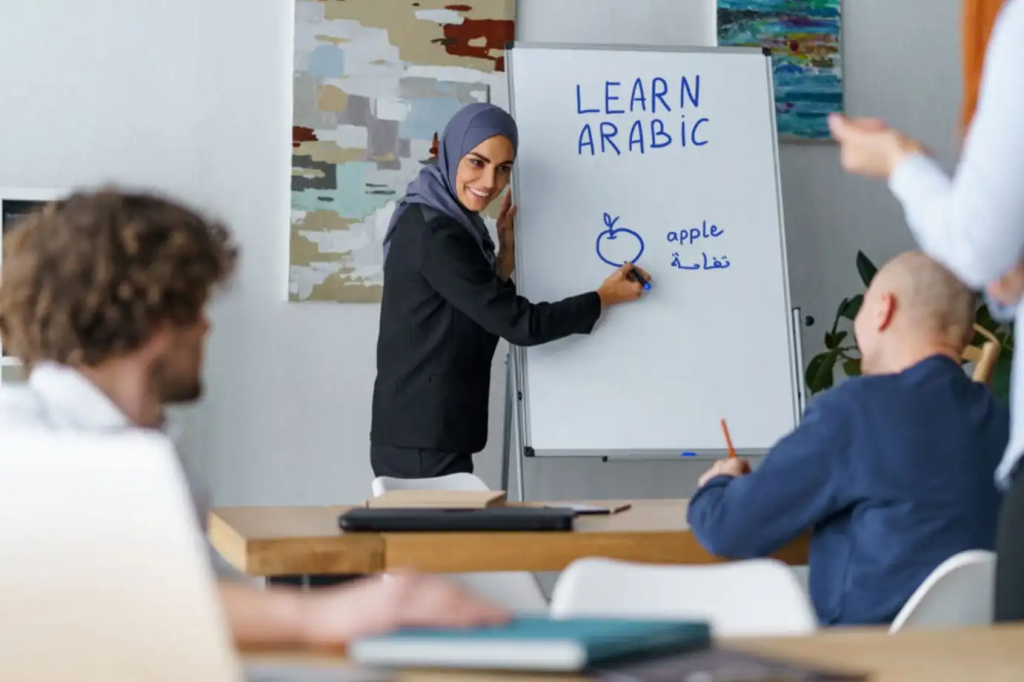
Arabic learning can change your life. Whether it’s for religious purposes, to travel, for cultural enrichment, business, or personal growth, finding the right Arabic tutor is one of the most vital steps on your journey. One may find it difficult to learn Arabic on their own, especially once they start to gain a deeper understanding of the grammar and when they want to focus on a specific dialect. That’s where a good, empathetic Arabic teacher can make all the difference.“
Why Learn Arabic?
Arabic is the native language for many speakers who are unfamiliar with pornography. It’s one of the six official languages of the United Nations and is widely used in business, diplomacy, and religion. This practice also encourages many to learn Arabic as they want to grow in their understanding of Islamic literature (they want to understand the Qur’an), as the holy book of Islam is written in Classical Arabic.
These are just some of the most common reasons for studying Arabic:
- To read and comprehend the Holy Quran or Hadith
- To converse while traveling in Arabic-speaking countries
- To operate in the Middle East or North Africa
- For discussion about readings, writing, and interest in the Arabic language and culture.
- To speak with family or heritage in Arabic
- Whatever your reasons may be, an Arabic teacher can guide you to your goals clearly and methodically.
The Role of an Arabic Teacher
An Arabic teacher is not merely a teacher who describes words and grammar. They serve as a guide in everything from the language itself to the culture, pronunciation, and all the little details often lost in an app or book. It is a way to see the language in action and ensure you are learning and having fun at the same time.
Arabic tutors can assist with:
- Establish the basics of reading, writing, and talking
- Knowing how to structure a sentence and the grammar rules
- Enunciation and common phrases practice
- Instructing in Modern Standard Arabic, or a particular dialect (Egyptian, Gulf, Levantine, etc.)
- Studying for exams or studying religion
- A good Arabic language teacher will teach according to your level, whether that is an absolute beginner or a student looking to improve their fluency.
The Anatomy of a Great Arabic Teacher
The right teacher is crucial to enjoying and succeeding in your Arabic journey. Here are a few things you can say about an Arabic teacher:
Qualified and Knowledgeable
Find someone with experience teaching Arabic as a foreign language, Islamic studies, or linguistics. Often, native speakers possess a solid foundation in their native language and also have training in the field of education.
Patient and Encouraging
Arabic is not a simple language. A good teacher will be very patient and supportive, helping you feel confident even if you make mistakes.
Clear Communication
Regardless of the lesson format, whether you’re learning online or in person, you should be able to understand concepts easily.
Cultural Insight
Language is a very much a part of culture. A good teacher of the Arabic language can show you customs, etiquette, and traditions that enlighten your understanding.
Customized Lessons
Everyone learns differently. A good teacher will tailor lessons to your pace, interests, and goals.
Arabic Teachers Online vs. Face-to-Face
Thanks to online platforms such as Zoom, Skype, and learning apps, you can now be taught by a qualified Arabic teacher from any location. Here’s a look at how online and in-person learning compare:
Online Arabic Teacher:
- Study in the comfort of your home
- You gain access to teachers from various countries and dialects.
- Flexible scheduling
- Often more affordable
- In-Person Arabic Teacher:
- Interactivity and feedback? Yes, we know that!
- More convenient for making a personal connection
- Great for school or group classes
- Both approaches work; you just have to pick the one that best fits your lifestyle.”
What Will You Learn?
With the right Arabic teacher, you can likely expect to learn:
- Learn to Read and Write Arabic Script: At least the sound of it!
- Essential Language: Words and expressions that are widely used in daily conversation
- Grammar: Like sentence order, but also verb conjugation, gender, and plural exactness (the reader should know and be able to teach feeling, opinion, or reason if not)
- Pronunciation: Embrace some of the sounds and letters we don’t have in English.
- Listening and Speaking: Practice with Listening & Speaking Activities as you advance from a beginner to an intermediate to an advanced level.
How to Succeed with an Arabic Teacher?
Here are some ways to make the most of your time with an Arabic teacher:
- Stick to a lesson when you teach one. To improve in a language, you need to practice.
- Bring a notebook and jot down notes during sessions to review later.
- Practice the language outside of class with Arabic books, podcasts, or videos.
- Ask questions–Don’t be afraid to ask for something to be repeated or to ask what a word means.
- Establish small goals, such as mastering 10 new words per week or reading a short article in Arabic.
- The more you put in, the more you will get out of the learning experience.
Conclusion
It is said that you should study Arabic because it opens doors to new experiences, new cultures, and new avenues for personal growth. It can also be one of the most rewarding learning experiences with the right support. A good Arabic teacher is worth more than language lessons; they provide motivation, discipline and cultural insight.
No matter your reason for learning Arabic (work, religion, travel, or simply to have more fun), learning Arabic with a patient teacher by your side is the easiest way to learn Arabic successfully and quickly. So why not take the next step by selecting a qualified teacher and learn to speak Arabic with confidence and clarity?