

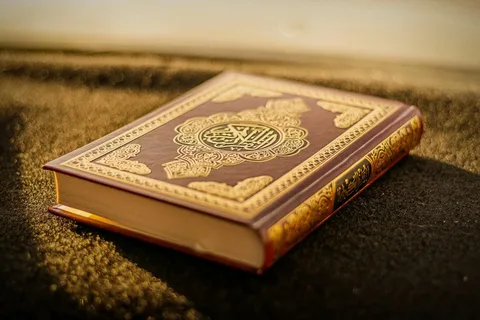
Believing in holy books is a primary aspect of numerous religions across the globe. These books are not mere documents; they are viewed as revelations that shape human conduct, morality, spirituality, and life’s purpose. Followers of Islam, Christianity, Judaism, and Hinduism, among other faiths, have scriptures that are viewed as holy and authoritative, from the Quran and the Bible to the Torah and the Vedas.
What Does It Mean to Believe in Holy Books?
Believing in holy books entails accepting them as God’s word or divine insight. These books are not authored by one or two people, and therein lies the faith that they are revealed by God or divinely inspired. This belief fosters a sense of trust, respect, and a commitment to live by the provided teachings.
Islam has one of the most distinct perspectives. It regards belief in the holy books as one of the six articles of faith. Muslims are not only called upon to believe in the Quran, they must also believe in the other revealed books, the Tawrat, Zabur, and Injeel, in their original form.
Why Is The Belief In Holy Books Important?
Belief in holy books is important in defining:
Moral Guidance: These books offer rules, parables, and narratives which help in distinguishing good and bad.
Spiritual Connection: The reading of scriptures assists believers to draw closer to the creator.
Community Unity: These shared beliefs create a social identity which unifies the believers.
Purpose and Meaning: Holy books address the big questions in life, which include our existence, responsibilities, and life after death.
Individuals who believe in the message of these holy books will embody the values and morals contained in these texts.
Belief in Holy Books Across Different Religions
The sacred scriptures of different religions are treated in the following ways:
1. Islam: The Quran
For Muslims, the Quran is God’s last and unaltered message to humanity, believed to have been revealed to the Prophet Muhammad (PBUH) over 23 years. It consists of 114 chapters (surahs) and covers a myriad of topics in spirit, law, and morality. Muslims are encouraged to believe in the earlier sacred books, such as the Torah, Psalms, and Gospel, as they were revealed, but unlike these books, Muslims believe the Quran is the last and complete message.
2. Christianity: The Bible
The Bible is divided into two parts known as the Old Testament and the New Testament. For Christians, the Bible is the main text. It has the teachings of prophets, creation stories, and the life and teachings of Jesus Christ. The Bible is believed to be divinely inspired and serves as a guide to faith and everyday practice.
3. Judaism: The Torah
The Torah, or the Law of Moses, is the central text of Judaism. It has five books and forms the basis of God’s teachings to the Jewish people. Like other religious texts, the Torah is studied and taught in synagogues and is central to religious and moral life.
4. Hinduism: The Vedas and Other Texts
Within Hinduism, the Vedas are regarded as the most ancient and revered scriptures. The texts are about rituals, philosophy, and other forms of spiritual knowledge. The Vedas are not the only revered texts, as others include the Upanishads, the Bhagavad Gita, and the Ramayana.
5. Buddhism: The Tripitaka
The Tripitaka, or “Three Baskets”, is a collection of teachings attributed to the Buddha. While Buddhism is not based around a singular divine god, the teachings contained within the Tripitaka are regarded as sacred. The texts are a guide to enlightenment and ethical living.
Barriers to Acceptance of Religious Texts
The acceptance of religious texts faces numerous obstacles in today’s modern and secular society:
Scientific Scepticism: Some people hold religious scriptures in scepticism, citing scientific facts as a reason.
Interpretation Issues: Different sects and schools of thought often interpret the texts, which sometimes leads to schisms.
Cultural Influence: The modern lifestyle of people today often contradicts the traditional values of the religious texts.
Controversial Use: The texts are sometimes unjustly cited in the name of discrimination, violence, or political motives.
Millions of people, however, continue to find deep meaning and truth in their scriptures, often justifying faith through reason and tradition through modernity.
Living Following The Precepts of Holy Books
One of the precepts of holy books is that followers practice them in the four aspects. The precepts are:
Living and practising the teachings of the holy books
Finding strength and solace in books during difficult periods
Bettering oneself and relations with others
Devotional guidance is cited in the holy books.
A good example of this is the holy books, for the People of the Book, the Psalms are a source of solace in sorrow, the Quran in confusion, and for the practising Hindus, the Gita guides through personal duty and morality.
These values remind us that humanity shares a deeper, spiritual bond.
Conclusion: Belief in Holy Books
It’s often thought that having faith in holy books merely translates to following religious guidelines. However, it’s about reaching a higher truth, living intentionally, and harmonising with profound wit. While religions differ in the sacred texts they uphold, the fundamental theme centres around love, virtue, and spiritual advancement. In times of chaotic, fast-paced living, these texts remain a source of comfort, guidance, and invitation.
FAQs about Belief in Holy Books
1. Why should people put faith in holy books?
Having faith in holy texts bestows a sense of moral clarity and divine guidance that inarguably brings meaning to one’s life.
2. Does every religion regard holy texts as equal?
Each religion champions its text as the most credible or last word. That said, some, such as Islam, do accept earlier texts as revealed scriptures preceding their own.
3. Can holy books have varying interpretations?
Yes, interpretation can change due to a person’s metaphysical worldview, culture, and language. This can explain why there are different sects or schools of thought within the same religion.
4. Are holy books still relevant in today’s society?
As society continues to evolve, people face new challenges, and holy books provide answers to time immemorial human dilemmas; ethics, existential purpose, justice, and self-improvement.
5. Are non-believers able to benefit from reading holy books?
Certainly, non-followers of a religion can find wisdom, historical context, moral lessons, and much more within the pages of many sacred texts.