

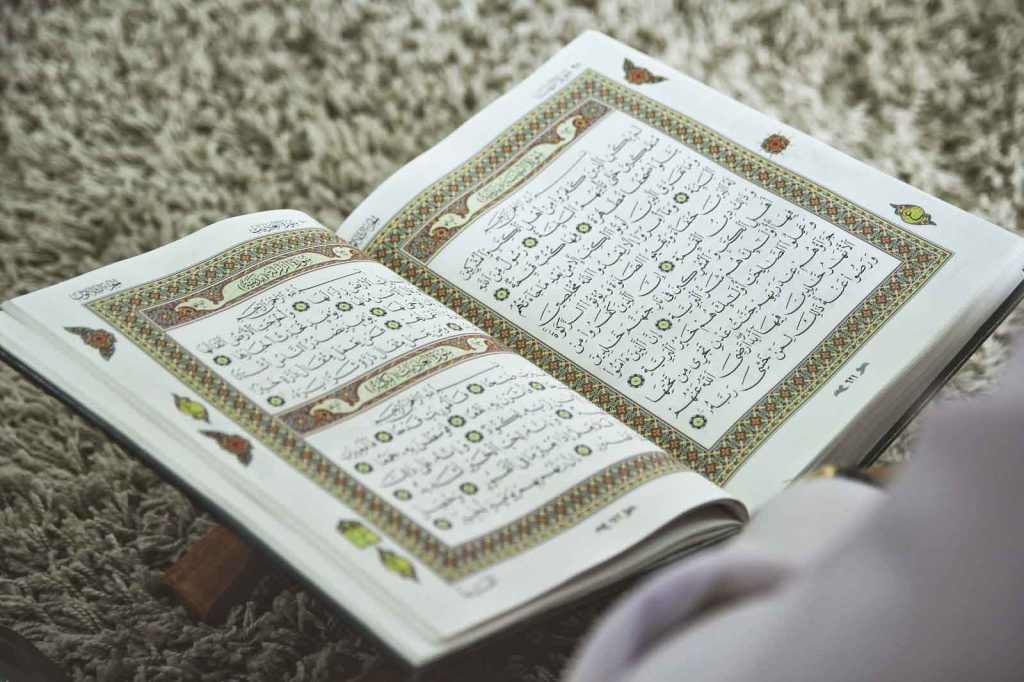
The Quran isn’t simply a guidebook; it’s also a book of eloquence, rhythm and divine sound. The most important feature to read with Tajweed is to learn the Quran with Tajweed first. The word Tajweed stems from the Arabic word ‘Jayyid’, meaning to do something well. A related word is ‘Jawwad’, which means bringing out one’s best. Tajweed is the art of pronouncing the Quran correctly, learning the proper pronunciation of every letter exactly as it was revealed to the holy prophet (PBUH). If you’ve ever heard someone recite the Quran beautifully and wished that you could do the same, then by learning the Quran with Tajweed, you definitely can!
What is Tajweed in the Quran?
The term “Tajweed” is derived from the Arabic root “j-w-d,” which means to improve or make better. Concerning the Quran, Tajweed is a mechanism for ensuring that each letter or phoneme has been recited authentically and appropriately. These rules include those regarding the articulation points (makharij), the particular qualities of the letters (sifat), the prolongation (madd), nasalisation (ghunnah), as well as the pause signs (waqf).
Recitation of the Quran Course with Tajweed helps readers learn how to pronounce the words of the Quran in its original pronunciation to save the original sound of the Quran and avoid the alterations made to it. A little bit of the wrong letter and that word means something else, which is why Tajweed is so important, not a bonus.
Why Is Learning Quran With Tajweed So Important?
Studying the Quran with Tajweed is not a skill, but a duty. Allah has ordered Muslims to recite the Quran in the right way as narrated in Surah Al-Muzzammil, “And recite the Quran (aloud) in a slow, (pleasant tone and) style.”
Here’s why learning to recite the Quran in Tajweed is essential:
Pronunciation Accuracy: Makes you say the words precisely as they’re meant to be.
Meaning Preservation: Prevents changes in meanings due to mistakes.
Heightens Spiritual Connection: The repetitive nature enhances concentration and humility while reading.
Beautifies Recitation: Tajweed makes the recitation of the Qur’an beautiful and sound.
Religious Obligation: The recitation has been done in a manner which is the worship of only Allah and is pleasing to Him.
When you recite the Quran with Tajweed, you are no longer just reading it; now you are fulfilling a religious duty as well as showing respect to its divine words with its right.
Basic Tajweed Rules That Every Student Should Know
If you are starting to learn the Quran having Tajweed, the following are some important rules that you will have to follow:
Makharij (Articulation Points)
Every Arabic letter has an origin in the mouth (or throat!). Having correct Tajweed will help you know exactly where to make every letter.
Sifat (Characteristics of Letters)
These are the characteristics of every letter, so it can be airy, heavy or vibrating. For instance, letters such as Qaf (ق) and Sad (ص) are “heavy,” while others such as Seen (س) are “light.”
Noon Sakin And Tanween Rules
Here is the rule regarding the letter Noon in different conditions, and especially Noon when it comes after certain letters.
Madd (Elongation)
Madd covers vowel sound stretching. The length of the length is context-dependent.
Qalqalah (Echoing Sound)
This is a soft bounce heard on some of the letters when spoken with sukoon (no vowel).
Learning these basic principles is the beginning of reading the Quran with Tajweed perfectly.
How to Learn Quran with Tajweed?
In this day and age of technology and universal access, it’s never been easier to learn the Quran with Tajweed. If you are a beginner or interested in honing your playing, here are a few good places to begin:
Online Tajweed Classes
Many professionals provide high-quality, one-on-one classes through online tutoring services. They are great for kids and adults, and you can learn at your own pace.
Local Islamic Centres or Masjids
Many mosques and Islamic centres have Tajweed classes available on weekends or evenings.
Mobile Apps and Tajweed Qurans
Applications such as iQuran, Quran Companion, and Tajweed Quran provide by rule explanation and recitation.
YouTube Tutorials
There are a myriad of scholars and teachers who upload videos showing how to recite the rules of reciting Tajweed using examples and practice drills.
The key to it is consistency, and whatever we have the practice of doing regularly. Reciting the Quran with Tajweed is not just rote, regulated memorisation; it is training your tongue, ear, and heart.
Advantages of Studying the Quran with Tajweed
Reading the Quran with the rules of Tajweed has merits in both this world and the hereafter:
You develop a closer relationship with the Quran.
Enhanced Memory and Focus: Proper recitation of the Quran and its verses, or Tajweed, also improves mental focus and memory.
Boosted Confidence in recitation: You will not hesitate to lead prayers or public readings.
Spiritual Serenity: The Tajweed of reciting the Qur’an purifies the feelings and the spirit.
Rewards in Akhirah: The Holy Prophet (PBUH) said, “The most virtuous among you are those who learn the Qur’an and teach it.”
When you commit to learn the Quran with Tajweed, you’re not just repeating words but experiencing a living miracle.
Tips for Improving Your Tajweed
Here are some tested tricks to help you get better:
Listen to a Master of Recitation: You need to follow reciters such as Al-Minshawi, Al-Husary, or Al-Afasy to adopt dynamics and pronunciation.
Recording and Comparison: Record yourself and compare with a trained reciter.
Master One Rule at a Time: You might consider mastering 1 Tajweed rule each week for manageable learning.
Practice Daily: Even 10–15 minutes a day can make a big difference.
Ask for Critique: Work with an experienced teacher who can listen to your recitation from time to time.
Keep it up, and soon you will read the Quran with Tajweed!
Conclusion
It’s like making a journey to learn Quran with Tajweed; you progress as a person, and not just with your Quran recitation. Whether you are a beginner or looking to take the next step, Tajweed is an important aspect of your study of the Quran and taking it on is a highly influential tool in your development as a spiritually endowed individual. There are so many resources, now there’s no excuse. Begin your journey today and allow the magnificence of the Quran to change your heart, a verse at a time.

FAQs
What is the difference of Quran reading between normal reading and Quran reading with Tajweed?
Reading Tajweed means to read the Quran with its precise rules of articulation, sound and pronunciation; otherwise, we are reading without rules and perhaps making mistakes in reading, thereby conveying something else than what was meant.
Is it possible to Learn Quran with Tajweed without knowing Arabic?
Yes, Tajweed is learned without knowledge of Arabic by many people successfully. You’ll learn pronunciation and rules without needing a basic fluency in Arabic.
How long does it take to learn the quran with Tajweed?
It depends on how dedicated and often you practice. With regular practice, most people will notice a difference in 3–6 months.
Is Tajweed compulsory in Islam?
Although not compulsory for general reading, Tajweed is essential for correct and respectful recitation, particularly in Salah and when reading the Qur’an in front of others.
Can kids learn the Quran with Tajweed?
Absolutely. In my experience, children usually learn Tajweed even quicker because their learning potential is also open-minded. Beginning early helps them form lifelong habits.