

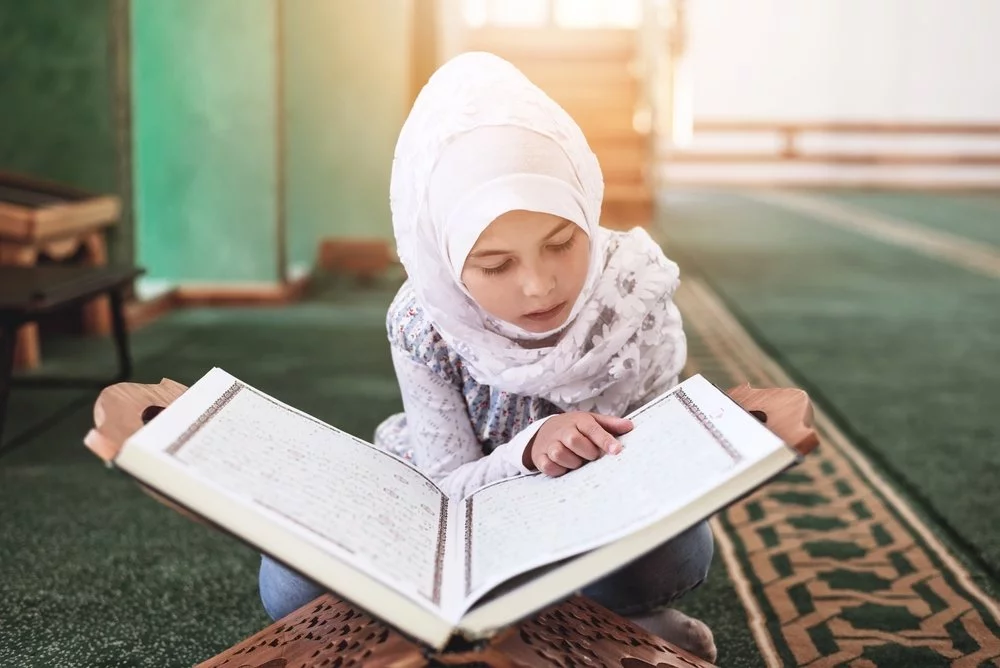
A Hifz academy is a school that specialises in Hifz, an institution that maintains an environment for one to memorise the Qur’an. Its goals are not just the memorisation itself; it is a journey which involves nurturing the soul, training the mind, and planting the seeds for the soundness of Islam in the hearts of the young. These academies are critical in producing the next generation of Muslim scholars, imams, and leaders, people who not only carry Allah’s words in their hearts but practice them daily with their deeds.
As the Muslim world modernises, the Hifz academies have become something of a refuge for spiritual peace and academic prospects. More than mere religious education, these schools shape individuals, give them confidence, and inspire a life-long bond with the Qur’an, not Western ideals. Sensing the prevailing distractions and moral relativity, parents are turning to these academies to inculcate their children with an identity guided by divine knowledge at any cost.
Hifz Academy Structure and Curriculum
Hifz academies usually have a planned routine that ensures students are able to combine memorisation, revision, and academic studies. Sometimes the boys start the day at Fajr and seize the quiet morning hours for concentrated Hifz time. Usually, the remainder of the day would be allocated for revision (Muraja’ah), recitation with Tajweed and at times infused with core academics such as math, science, and language.
The program aims at memorising the Whole of Qur’an — 30 Juz in 2—4 years, depending on the student’s ability, dedication & commitment. “We teach them more than memorisation; the meaning of verses, the value of Tajweed (correct pronunciation), and the basics of Islam to build their memory and understanding,” He added. Certain academies offer a grounding in Islamic etiquette (Adab), Hadith traditions, and even public speaking as part of their curriculum, preparing students to be well-rounded Muslims and future leaders.
The method is what makes a Hifz academy distinct from elsewhere. Repetition, peer-learning, small teacher-student ratios, and tailor-made study plans are central elements. Teachers evaluate the capacity of every child and thus set a specific curriculum. “The fact that you have a small number of people with you makes the trip more doable and emotionally manageable, even for young kids,” she says.
Miracles of Hifz Upon the Soul and Mind
Hifz isn’t solely a mental exercise it’s something much more profound and spiritual. Many people lose weight after an orientation process focused on attentiveness, restraint and managing emotions. Memorising the Qur’an nourishes children’s souls, leading to a strong spiritual connection with Allah. It promotes frequent prayer, gratitude and ethical behaviour, all of which are often lacking in the traditional classroom.
Psychologically, Hifz enhances cognitive functions. There is considerable evidence that memorisation not only enhances concentration, analytical skills and information retention, but also makes long-term learning easier. In addition, the discipline and everyday nature of Hifz studies teach an invaluable quality to children, which can be applied to any sphere of life: resolve.
What’s more, if a child memorises the Qur’an, he or she will have more self-confidence and public speaking skills. Standing in front of teachers, classmates and sometimes the entire school, teaches them poise and how to articulate. They also learn to cope with the pressure, take responsibility, and cultivate pride in their identity and religion.
Challenges and Solutions
The journey to the recitation of the Quran does not come without its challenges. Memory is also a major issue. Cordero explained that a student will let go of some of the previous lessons while they learn the new ones, which can be frustrating. To compensate for this, teacher educators in Hifz academies use a periodic review called Muraja’ah. The secret is repetition: what’s memorised needs to be reviewed daily, weekly, and monthly.
The other difficulty is managing Hifz in parallel with studies. Some children find it difficult to achieve Islamic and secular education at the same time. A flexible, supportive setting is also important many Hifz academies can modify academic loads or even offer evening instruction to accommodate different needs.
It’s also emotional or psychological burnout. Pressure from parents or false timelines can lead to stress or disinterest. It is important that educators and families foster a love for the Qur’an rather than make it a race. Little celebrations, frequent pauses, and spiritual reflection all can contribute to a student’s motivation and mental health.
The Parents and Community Come into Play
Hifz’s journey does not occur in a vacuum. It is important for parents and the community to be supportive. A student’s home environment can have a significant impact on his or her progress. When parents take pride in their child’s daily lessons, provide a distraction-free desk space, and have an established spiritual rhythm in the home, it is the foundation for great success.
Community is equally important. Hifz students require selfless role models to look up to, whether that involves an older brother or a local scholar or leader who has finished their memorisation. Occasions such as Qur’an contests, the communal eating during Ramadan or special recognition ceremonies can re-energise the students and help them to understand that they are part of something bigger than themselves.
And when the community promotes (Hifz) programs, it benefits. After all these kids become imams, teachers, and spiritual leaders, they benefit the community. The reward, in Islamic tradition, isn’t exclusive to the student but also to those who accompany that journey.
Conclusion
Hifz academies are not simply schools or even institutions; they are the nurseries of soul enrichment, moral uprightness, and societal habilitation. In a place where fleeting distractions and values are awash, they have an anchor around which young Muslims are linked to the timeless message of the Qur’an. They do much more than impart memorisation; in fact, they teach discipline, bravery and an unbroken connection to Allah’s living revelation.
Although the journey is long and at times arduous, the rewards are like nothing else in this life or the next. A child who learns to recite the entire Qur’an is granted tremendous spiritual benefits, but so are the parents and teachers who help make that possible. As we invest in these minds, we are not just preserving a sacred text; we are shaping a future of those who live in the light of God in a world to come.

FAQs About Hifz Academy
At what age should one begin Hifz?
Normally, the age of Hifz begins when a child is between 6 and 10, as memory is strong and distractions are less. But it’s never too late – teenagers and adults can still accomplish the Hifz journey with determination and the right support system.
How long will it take me to finish the Qur’an in a Hifz school?
It will take a different amount of time for different students, depending on how much time they can invest in their studies. Full memorisation typically runs between 2 and 4 years, though a few academies provide an accelerated path or offer a part-time option.
Are regular subjects taught in Hifz academies?
Yes, it is a fact that some of the ‘modern Hifz schools teach secular education alongside the memorisation of the Qur’an. Students are also given a balanced schedule that includes subjects such as math, science and English.
What if a child forgets some of what he or she has memorised?
Forgetfulness is frequent, and so revision (Muraja’ah) remains part of everyday life. The majority of academies create a revision schedule to ensure students maintain old teachings as they move on to the next ones.
Do girls have the facility of joining Hifz academies?
Absolutely. Hifz education is available for both girls and boys, and special courses are designed and female teachers are employed, ensuring obedience in the learning environment for girls for the recitation of the Qur’an.